
Power Generation and Energy Infrastructure
Large Generator Enclosure Bases Built for Repeatable Production
APPLICATION
Data-Center Generator Enclosure Base
APPROX. SIZE
13 ft x 38 ft
BUILD APPROACH
Full-Size Custom Fixturing
PRODUCTION TYPE
Repeat Production Run
What We Built
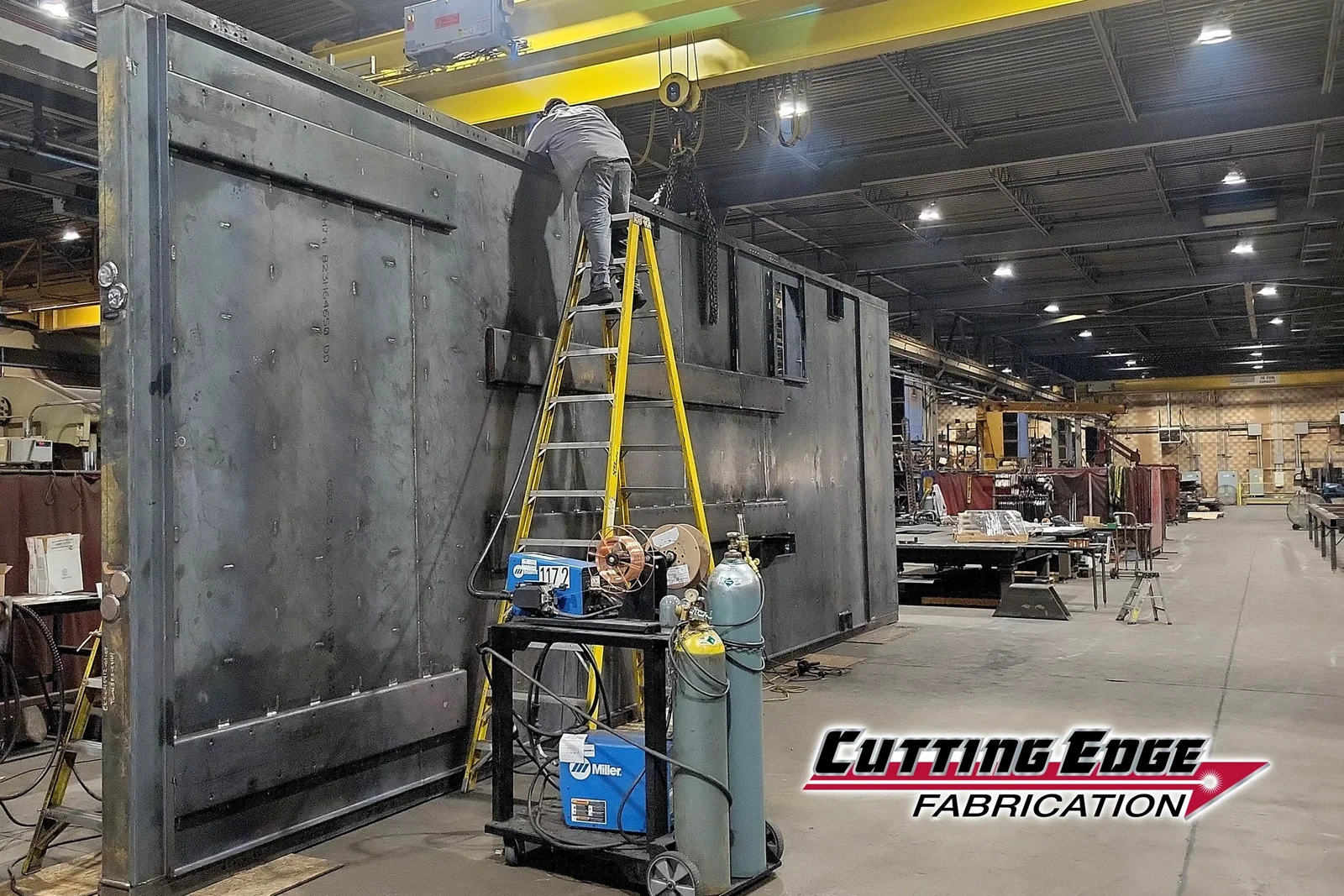
CEF fabricated the welded subframe that forms the structural base of a data-center generator enclosure. Its geometry is the reference for the customer’s downstream enclosure work, which meant every unit in the program had to come off the floor the same way.
The Challenge
Large welded bases have to do more than meet overall length and width. The structure must remain controlled through fit-up, welding, handling, and assembly so the finished base supports the customer’s downstream enclosure work. The size of this subframe increased the importance of repeatable location, a deliberate welding plan, and a fixture built for production rather than a one-time build.
What We Did
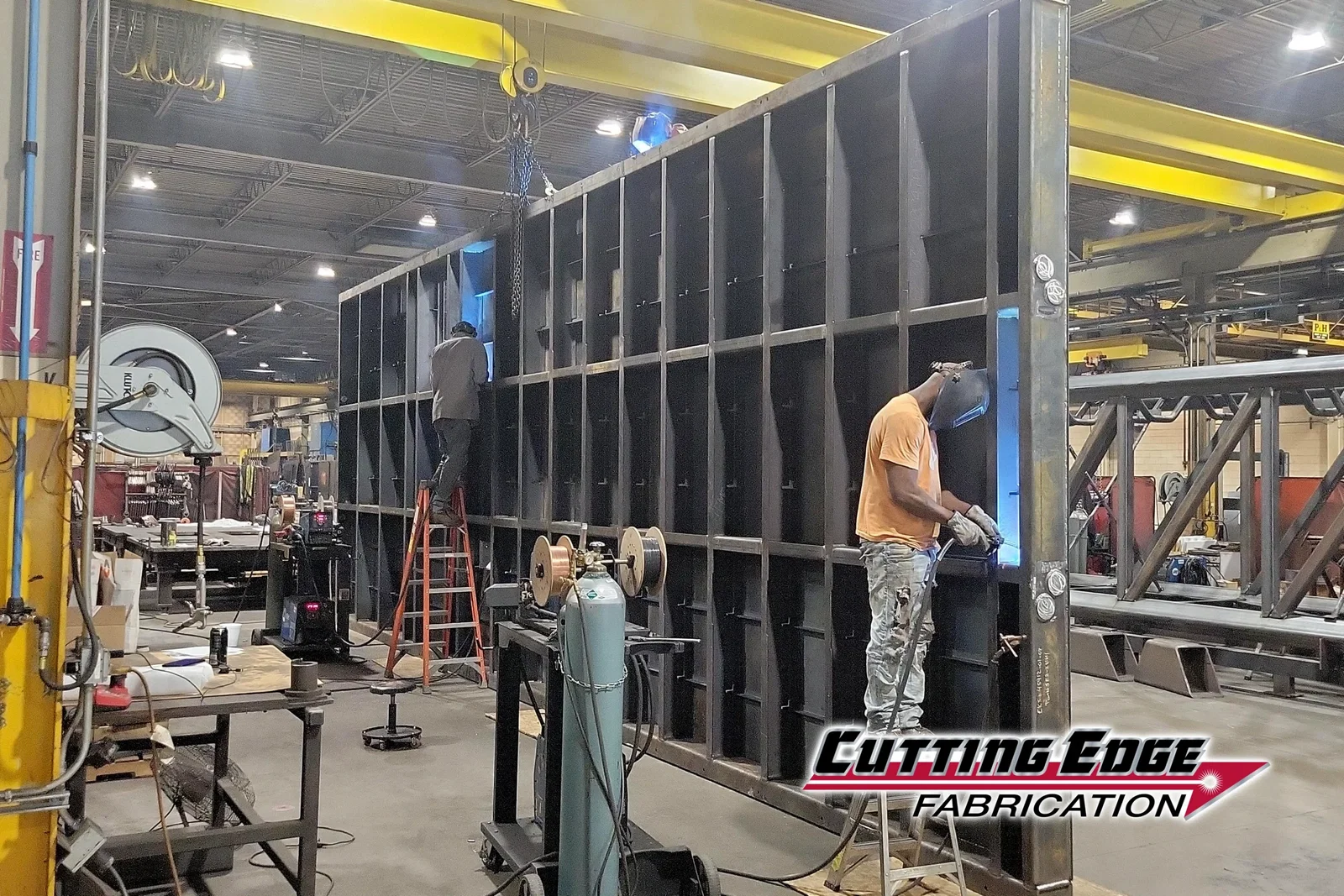
CEF developed a full-size fixture around the part geometry and production requirements, establishing repeatable locations for the major members and consistent fit-up from one assembly to the next. A controlled welding sequence managed heat input and distortion across the long structure, with fit-up, welding, and verification coordinated so geometry could be monitored during production. The result: repeatable welded bases delivered across the full production run.
Engineering Considerations for Large Welded Bases
Scale changes the nature of the problem. In large fabricated structures, longer members extend heat paths and create steeper thermal gradients, so a weld that would be routine on a small assembly produces measurable movement across a long one. Deviations that are minor at an individual joint accumulate across dozens of welds into misalignment that surfaces at final assembly rather than at the weld itself.
Three forms of distortion are typically at work: longitudinal, transverse, and angular. Weld sequence is the primary control over all three, because the order in which heat is applied governs the direction shrinkage takes. Back-step and skip welding on long seams, balanced alternating passes, and progression toward free ends are all ways of distributing thermal effect predictably instead of letting it accumulate in one direction.
Fixturing does more than hold parts still. A fixture built for a production program stabilizes the datums that downstream assembly will reference, maintains fit-up through tacking and early passes, and controls angular movement at the joints. Restraint has to be deliberate — over-constraining a weldment locks residual stress into the structure, which releases as unpredictable spring-back once the part comes off the fixture. A good fixture allows controlled shrinkage where movement is acceptable and holds firm where it isn’t.
The last variable is when geometry gets checked. Measuring only at final inspection means finding distortion after the point where it can be corrected economically. Checkpoints after fit-up, after stabilizing passes, and before closing welds keep geometry visible while it’s still workable, which turns distortion from a rework problem into a managed one.
For a buyer, the practical question is whether a fabricator has thought through sequence, fixturing, and measurement as one system before the first production weld — or plans to inspect the problem after the fact.
Related: Power Generation & Energy Infrastructure · Large Welded Structures · Custom Production Fixturing
- Primary challengeGeometry control at scale
- Key risk managedHeat input and distortion
- Work involvedFit-up, welding, assembly
- ScopeFabricated to customer drawing
Have a Similar Project?
Send us your drawing and we’ll tell you what it takes to build it.
Submit a DrawingLarge Weldments, Built to Your Drawing
CEF fabricates medium-to-large welded structures and mechanical assemblies for power generation, heavy equipment, civil infrastructure, and material handling.